Mid-Century: Function Meets Form
An era that democratized design, proving that mass-produced elegance could enrich the daily lives of everyday people.
The Origins of Organic Geometry
Spanning from roughly 1945 to 1969, Mid-Century Modern design emerged from a post-war optimism. Architects and designers like Eero Saarinen and Charles Eames pioneered the use of new materials—fiberglass, bent plywood, and tubular steel—blending them seamlessly with traditional woods.
The goal was simple: bring good design to the masses. Form strictly followed function, yet the resulting shapes were incredibly sculptural, mimicking the organic flow of nature.

Indoor-Outdoor Synergy
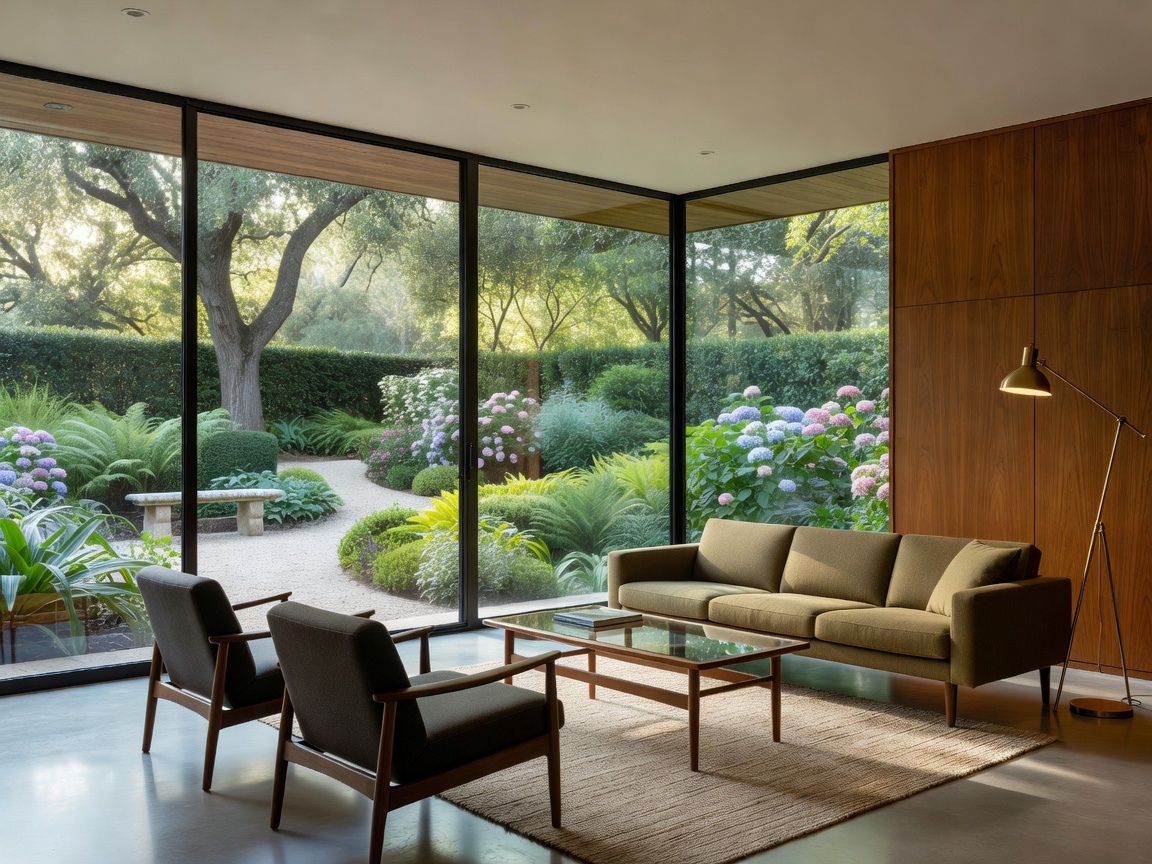
One of the hallmark philosophies of the Mid-Century movement is the dissolution of boundaries between the interior and the exterior world. Large, unadorned windows, sliding glass doors, and unified floor materials pull the landscape inside.
For modern application, this means prioritizing natural light, avoiding heavy window treatments, and introducing structural greenery into your living zones.
Key Hallmarks
Tapered Legs
Furniture is lifted off the floor on thin, angled pegs, creating an illusion of space and preventing visual heaviness.
Warm Teak & Walnut
The dominant woods provide a deep, rich baseline that grounds the lighter, more vibrant upholstery colors typical of the era.
Statement Lighting
From the Sputnik chandelier to sweeping arc floor lamps, lighting acts as kinetic sculpture rather than mere utility.